Posts

Showing posts with the label Ball

Volleyball, World of Sports
Image
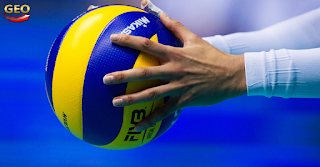
Volleyball is one of the most successful and popular competitive and recreational sports in the world. It is fast, it is exciting and the action is explosive. Yet volleyball com­prises several crucial overlapping elements whose complimentary interactions render it unique amongst rally games. The ball shall be spherical, made of a flexible leather or synthetic leather case with a bladder inside made of rubber or a similar material. Its colour may be a uniform light colour, or a combination of colours. Synthetic leather material and colour combinations of balls used in Inter­national Official competitions should comply with FIVB standards. Circumference of ball shall be 65-67 cm and its weight shall be 260-280 g. Inside Pressure shall be 0.30 to 0.325 kg/cm2 (4.26 to 4.61 psi) (294.3 to 318.82 mbar or hPa).  All balls used in a match must have the same standards regarding circum­ference, weight, pressure, type, colour, etc. About Volleyball Sport Volleyball is...

About Table Tennis Ball

Image
Table Tennis ball shall be spherical in shape with a diameter of 40mm. The ball shall weigh 2.7 grams. The ball shall be made of celluloid or similar plastics material and shall be white or orange and matt. The international rules specify that the game is played with a sphere having a mass of 2.7 grams (0.095 Oz) and a diameter of 40 mm (1.57 in). The rules say that the ball shall bounce up 24–26 cm (9.4–10.2 in) when dropped from a height of 30.5 cm (12.0 in) onto a standard steel block thereby having a coefficient of restitution of 0.89 to 0.92. The choice of ball color is made according to the table color and its surroundings. For example, a white ball is easier to see on a green or blue table than it is on a grey table. Manufacturers often indicate the quality of the ball with a star rating system, usually from one to three, three being the highest grade. As this system is not standard across manufacturers, the only way a https:...

About Cricket Ball

Image
The Cricket ball is a basic requirement for any game of Cricket to happen. A Cricket ball is made of cork and latex and is covered by leather. This leather is held together by stitching which is called the “Seam”. The ball, when new, shall not weigh less than 5½ ounces/155.9 grams, nor more than 5¾ ounces/163 grams (156 grams is Optimum), and shall measure not less than 813/16 inches/22.4 cms, nor more than 9 inches/22.9 cms in circumference. Based on format of the game, Cricket balls  are made of different colors these days i.e. Red, White, and Pink etc. In Test and First class Cricket matches, Red ball is being used. In One day limited overs matches and T-20 Matches (Day/ Night Matches) a White ball is being used. Recently ICC (International Cricket Council) has allowed the Pink Ball to be used in Day/ Night Test Matches. The shape and dimensions are the same for Red, White & Pink balls. The seam that runs around its circumference can make the ball bounce away and to...

Volleyball, The World of Sports

Volleyball is one of the most successful and popular competitive and recreational sports in the world. It is fast, it is exciting and the action is explosive. Yet volleyball com­prises several crucial overlapping elements whose complimentary interactions render it unique amongst rally games. The ball shall be spherical, made of a flexible leather or synthetic leather case with a bladder inside made of rubber or a similar material. Its colour may be a uniform light colour, or a combination of colours. Synthetic leather material and colour combinations of balls used in Inter­national Official competitions should comply with FIVB standards. Circumference of ball shall be 65-67 cm and its weight shall be 260-280 g. Inside Pressure shall be 0.30 to 0.325 kg/cm2 (4.26 to 4.61 psi) (294.3 to 318.82 mbar or hPa). All balls used in a match must have the same standards regarding circum­ference, weight, pressure, type, colour, etc. 

About Tennis Ball

Image
Tennis ball shall have a uniform outer surface consisting of a fabric cover and shall be white or yellow in colour. If there are any seams they shall be stitch less. Size of the ball shall be more than 1.975 ounces (56.0 grams) and less than 2.095 ounces (59.4 grams) in weight. Each ball shall have a bound of more than 53 inches (134.62 cm) and less than 58 inches (147.32 cm) when dropped 100 inches (254.00 cm) upon a flat, rigid surface e.g., concrete. Ball Type 1 (fast speed) shall have a forward deformation of more than .195 inches (.495 cm) and less than .235 inches (.597 cm) and return deformation of more than .265 inches (.673 cm) and less than .360 inches (.914 cm) at 18 lb. (8.165 kg) load. Ball Types 2 (medium speed) and 3 (slow speed) shall have a forward deformation of more than .220 inches (.559 cm) and less than .290 inches (.737 cm) and a return deformation of more than .315 inches (.800 cm) and less than .425 inches (1.080 cm) at 18 lb. (8.165 kg) load. T...